 By Miles Sinclair
Updated November 2026
Choosing a bike pump pressure gauge comes down to accuracy, build quality, valve compatibility and how often you ride. A gauge that reads within a few PSI keeps your tires in the range the manufacturer recommends, which protects rims and improves ride feel. The picks below were selected by reviewing manufacturer specifications, brand reputation and common owner feedback patterns for each design, with attention to valve compatibility (Presta and Schrader), maximum pressure, gauge type, portability and build materials. We have not tested these pumps ourselves, so use the specs as a starting point and check your tire sidewall for the correct pressure range.
Our top picks at a glance
- 1
 TOP CHOICEBest overallTopeak JoeBlow Sport III Bike Floor PumpView on Amazon
- 2
 TOP CHOICEBest for portable inflationAstroAI L7 Tire Inflator Portable Air CompressorView on Amazon
- 3
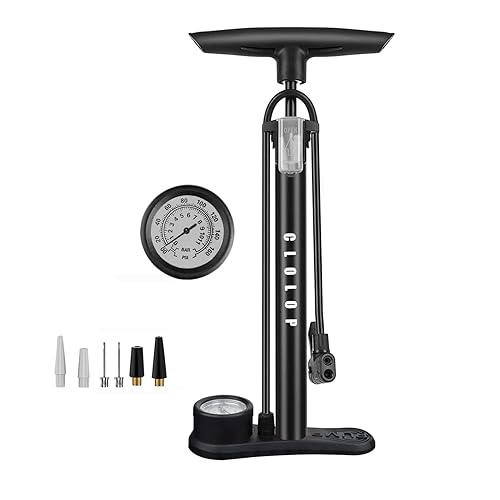 TOP CHOICEBest for dual valve headsCLOLOP Bike Floor Pump with GaugeView on Amazon
- 4
 Best for frame mountingBlackburn Telescoping Bicycle Frame Pump with GaugeView on Amazon
- 5
 Best for compact storageAluminum Alloy Compact Bike Pump with GaugeView on Amazon
- 6
 Best for high-pressure road tiresBike Floor Pump with Gauge: 160 PSI High PressureView on Amazon
- 7
 Best budget pickBike Pump with Gauge, Presta and Schrader Floor PumpView on Amazon
Our Top Picks
Quick Comparison
| Product | Best for | Key feature |
|---|---|---|
| Topeak JoeBlow Sport III Bike Floor Pump | Road and mountain riders who want one pump for every valve | TwinHead valve fits Presta, Schrader and Dunlop; 3-inch gauge |
| AstroAI L7 Tire Inflator Portable Air Compressor | Riders who want fast, cordless inflation | Digital display with auto shut-off |
| CLOLOP Bike Floor Pump with Gauge | Shared-use households and multi-bike owners | Dual Presta and Schrader head |
| Blackburn Telescoping Bicycle Frame Pump with Gauge | Trail riders who carry a pump on the frame | Telescoping design with built-in gauge |
| Aluminum Alloy Compact Bike Pump with Gauge | Riders with limited storage space | Lightweight aluminum body |
| Bike Floor Pump with High Pressure 160 PSI | High-pressure road tires | 160 PSI maximum rating |
| Bike Pump with Gauge, Presta and Schrader | Budget-conscious riders | 160 PSI with 11 BAR rating |
Topeak JoeBlow Sport III Bike Floor Pump
One Head Fits Presta, Schrader and Dunlop | Steel Barrel and Base | Long 360-Degree Hose | Padded Handle Topeak JoeBlow Sport III Bike Floor Pump, 160 psi, 3-in Gauge, TwinHead
Best for: Overall reliability and valve versatility
This is a good fit for riders who want one floor pump that handles nearly every valve they will encounter, from a road bike with Presta tubes to a car or sports ball with Schrader. The steel barrel and base are a common point of praise in owner feedback for this model line.
Key specs:
- Maximum pressure: 160 PSI
- Gauge size: 3 inches
- Valve head: TwinHead, fits Presta, Schrader and Dunlop
- Hose: long 360-degree swivel hose
- Handle: padded
Pros:
- Steel barrel and base for a stable, durable build
- Single head covers three valve types
- Padded handle reduces hand fatigue on high-volume tires
Cons:
- Heavier than frame or handheld pumps, so it stays at home or in the garage
- Larger footprint than compact designs
Bottom line: A strong pick for riders who want one reliable floor pump for mixed valve types and a readable gauge.
AstroAI L7 Tire Inflator Portable Air Compressor
For Car Tires, Bikes, Motorcycles and Balls; Auto Shut-off, Digital Display Pressure Gauge, Fast Inflation, LED Light AstroAI L7 Tire Inflator Portable Air Compressor,150 PSI Cordless Bike Pump
Best for: Fast, cordless inflation
This model suits riders who want to avoid manual pumping, or who also need to inflate car tires, motorcycle tires and sports equipment. It is a bigger choice than a hand pump, so it works best for home or car-trunk use.
Key specs:
- Maximum pressure: 150 PSI
- Digital display pressure gauge
- Auto shut-off at the set pressure
- LED light
Pros:
- Digital readout is easy to read at a glance
- Auto shut-off helps prevent overinflation
- Works across bikes, cars and balls
Cons:
- Requires charging and is heavier than a frame pump
- Not a substitute for a manual pump on a remote trail
Bottom line: Best for riders who want speed and a digital gauge and can keep a powered inflator at home or in the car.
CLOLOP Bike Floor Pump with Gauge
CLOLOP Bike Floor Pump with Gauge, Bike Tire Inflator, Air Pump, Bike Pump with Dual Presta & Schrader Valve Head, Bicycle Air Pump, Ball Pump for Road Bike, Mountain Bikes, Balls
Best for: Shared use across valve types
This pump fits households where more than one person rides, since the dual valve head avoids swapping adapters. It is a floor pump, so plan for a fixed spot in the garage.
Key specs:
- Dual Presta and Schrader valve head
- Built-in gauge on the barrel
- Suitable for road, mountain and bicycle tires, plus balls
Pros:
- Dual head removes the need for separate adapters
- Good all-around use for family bikes
- Stable floor base for easier pumping
Cons:
- Bulkier than compact or frame options
- Gauge accuracy should be checked against a reference gauge for high-pressure tires
Bottom line: A practical choice for multi-bike households that want one pump for everyone.
Blackburn Telescoping Bicycle Frame Pump with Gauge
Blackburn Telescoping Bicycle Frame Pump with Gauge
Best for: Carrying a pump on the frame
Trail and gravel riders who need to fix a flat away from home will value a pump that mounts to the frame. The telescoping barrel shortens for mounting and extends for easier pumping.
Key specs:
- Telescoping barrel design
- Built-in gauge
- Designed for frame mounting
Pros:
- Travels with you on the bike
- Telescoping design gives a longer stroke than a fixed frame pump
- Built-in gauge provides feedback on the trail
Cons:
- Slower to reach high pressure than a floor pump
- Smaller barrel means more strokes for larger-volume tires
Bottom line: Good for trail riders who want a gauge on the bike without carrying a separate pump.
Aluminum Alloy Compact Bike Pump with Gauge
Aluminum Alloy Bicycle Pump, Compact Bike Tire Pump with Gauge, Fits Presta/Schrader Valves, Hand Pump for Mountain Bike Bike Floor Pump with Gauge, Bike Pump for Road Mountain Bikes
Best for: Limited storage space
Apartment dwellers and riders with small garages benefit from a compact design. The aluminum body keeps weight down while still offering a gauge and dual valve compatibility.
Key specs:
- Aluminum alloy body
- Fits Presta and Schrader valves
- Built-in gauge
Pros:
- Lightweight aluminum body
- Compact footprint for storage
- Works with both common valve types
Cons:
- Shorter stroke requires more effort for high-volume tires
- Less stable than a floor pump during use
Bottom line: A sensible choice when storage is the main constraint and you ride mostly smaller-volume tires.
Bike Floor Pump with Gauge: 160 PSI High Pressure
Bike Floor Pump with Gauge: Air Bicycle Pump with High Pressure 160 PSI,Fits Schrader and Presta Valve -Inflator with Ball Pump Needles for MTB Road Bike, Ball, Balloon, Inflatables
Best for: High-pressure road tires
Road riders running narrow tires at high pressure need a pump that reaches the upper PSI range with a readable gauge. This model is marketed for 160 PSI and both valve types.
Key specs:
- Maximum pressure: 160 PSI
- Fits Schrader and Presta valves
- Includes ball pump needles for other inflatables
Pros:
- High pressure rating suits narrow road tires
- Works with both valve types
- Includes needles for balls and inflatables
Cons:
- Floor-pump size requires a dedicated spot
- Reaching high pressure takes more effort than with a powered inflator
Bottom line: A good fit for road riders who regularly inflate to high pressure and want a floor pump.
Bike Pump with Gauge, Presta and Schrader Floor Pump
Bike Pump with Gauge,Bicycle Floor Pump for Presta and Schrader Valves Bike Tire Pumps Inflator High Pressure 160PSI & 11BAR Portable Air Pump for Road Bike Car MTB Sports Balls
Best for: Budget-conscious riders
This is a budget pick for riders who need a functional gauge and dual valve support without paying for premium materials. It handles road, mountain and car tires.
Key specs:
- Maximum pressure: 160 PSI (11 BAR)
- Fits Presta and Schrader valves
- Portable air pump design
Pros:
- Accessible option for occasional riders
- Dual valve compatibility
- Covers bikes, cars and sports balls
Cons:
- Owner feedback on gauge durability varies, so check it on arrival
- Fewer premium build details than higher-end floor pumps
Bottom line: A reasonable starting point for casual riders who want a gauge and both valve types on a tight budget.
Buying Guide
Gauge Type and Accuracy
Analog gauges are easy to read and need no batteries, while digital gauges show a precise number and often include auto shut-off. Check whether the gauge reads in PSI, BAR or both. Owners of any gauge pump often recommend confirming readings against a separate gauge once in a while, since small errors add up at high pressure.
Good picks for this: AstroAI L7 Tire Inflator Portable Air Compressor, Topeak JoeBlow Sport III Bike Floor Pump
Valve Compatibility
Presta valves are narrow and common on road and performance bikes, while Schrader valves are wider and common on mountain bikes, cars and many hybrids. A pump with a dual head or a TwinHead design saves you from buying adapters. Look at your valve type before you buy anything.
Good picks for this: CLOLOP Bike Floor Pump with Gauge, Aluminum Alloy Compact Bike Pump with Gauge
Maximum Pressure Rating
Check your tire sidewall for the recommended range, which is often printed as a minimum and maximum PSI. Road tires commonly run at higher pressures than mountain tires, so a pump rated to 160 PSI gives more headroom for narrow road tires. Pick a pump with a maximum rating above your tire’s upper limit.
Good picks for this: Bike Floor Pump with Gauge: 160 PSI High Pressure, Bike Pump with Gauge, Presta and Schrader Floor Pump
Pump Type and Size
Floor pumps offer the most stability and the largest barrel, which moves more air per stroke. Frame pumps are compact enough to carry on the bike. Handheld and compact pumps save space but need more effort for larger tires. Match the pump size to where you will store and use it.
Good picks for this: Blackburn Telescoping Bicycle Frame Pump with Gauge, Aluminum Alloy Compact Bike Pump with Gauge
Build Materials and Durability
Steel barrels and bases tend to feel more stable under load, while aluminum bodies reduce weight. Check the hose, the head and the gauge connection, since these parts see the most wear. A well-built pump should feel solid when you press the handle and should not wobble on the floor.
Good picks for this: Topeak JoeBlow Sport III Bike Floor Pump, Bike Floor Pump with Gauge: 160 PSI High Pressure
Portability and Use Case
Think about where you will inflate most often. A home pump can be larger, while a trail pump must fit on the frame or in a jersey pocket. If you ride far from home, a compact or frame design with a gauge is more useful than a floor pump. Cordless inflators suit car and home use but need charging.
Good picks for this: Blackburn Telescoping Bicycle Frame Pump with Gauge, AstroAI L7 Tire Inflator Portable Air Compressor
Care and Maintenance
Keep the hose and head clean and dry, and store the pump indoors if possible. Check the seal around the valve head for wear, and replace worn parts when the manufacturer offers them. Avoid forcing a pump onto a valve at an angle, which can damage the core. Battery-powered models should be charged according to the manufacturer’s instructions.
Good picks for this: Topeak JoeBlow Sport III Bike Floor Pump, CLOLOP Bike Floor Pump with Gauge
FAQ
What does a bike pump pressure gauge actually measure?
It shows the air pressure inside the tire, usually in PSI (pounds per square inch) or BAR. Most road and mountain tires list a recommended range on the sidewall, and the gauge helps you hit that range.
Is a bike pump with gauge more accurate than checking by feel?
Yes. Pressure is hard to judge by squeezing a tire, and a gauge gives a repeatable reading. For high-pressure road tires, a gauge is especially useful because small differences in PSI change the ride noticeably.
Can I use a car-style gauge on a bike tire?
Many gauges are built for the lower pressure ranges of car tires and may not read accurately at the top of a road tire’s range. Choose a gauge rated to the pressure your bike needs.
What is the difference between Presta and Schrader valves?
Presta valves are narrower with a locking nut and are common on road bikes. Schrader valves are wider, similar to car valves, and are common on mountain bikes and hybrids. A dual-head pump handles both without adapters.
Should I check tire pressure before every ride?
Many riders check before each ride, especially with tubeless or high-pressure tires, since pressure can drop over time. Checking regularly helps you spot slow leaks early.
How often should I check my pump gauge for accuracy?
You can compare the reading against a second gauge, such as one at a shop or on a car tire, when you suspect the pump is off. If you rely on exact pressures for racing or tubeless setups, a periodic check is a good habit.
Are electric pumps better than manual pumps with gauges?
Electric pumps are faster and reduce effort, while manual pumps need no charging and are more reliable when you are away from power. Many riders keep a manual pump on the bike and use an electric inflator at home.
Conclusion
For most riders, a floor pump with a clear gauge and a TwinHead or dual valve head covers the widest range of needs. The Topeak JoeBlow Sport III suits riders who want one reliable pump for every valve, while the AstroAI L7 suits anyone who wants fast, cordless inflation at home or in the car. Trail riders should look at the Blackburn Telescoping Frame Pump so a gauge travels with the bike. Riders with tight storage should consider the aluminum compact design, and high-pressure road riders should look at the 160 PSI floor pump. Budget-conscious buyers will find the CLOLOP and budget Bike Pump with Gauge options a reasonable place to start. Always match the pump to your valve type and your tire’s recommended pressure range.
Sources
- Consumer product safety information and guidance on recalls and safe use of consumer products (cpsc.gov)
- Measurement standards and calibration guidance relevant to pressure gauge accuracy (nist.gov)
Related reading
- E Bike Air Pump: Why Your Tire Pressure Drops and How to Fix It
- Bike Pumps and Tire Pressure: Getting It Right
- Topeak Joe Blow Sport Iii Bike Pump: A Practical Guide (2026)
About Miles Sinclair
Miles Sinclair is part of our editorial team and reviews and edits our bike accessories guides, checking product details against manufacturer specifications and owner feedback.


