As an Amazon Associate I earn from qualifying purchases. This page may contain affiliate links.
Fog lights for bike are wide, low-mounted lamps built to light up the road surface and the edges of the trail, while standard front lights throw a longer, narrower beam meant for seeing far ahead. If you ride mostly on rough trails, gravel, or foggy and rural roads where you need to see the ground in front of your wheel, a fog light is usually the better pick. If you ride fast on paved roads, commute in traffic, or need to spot hazards far down the road, a standard front light with a focused beam will serve you better, and many riders run both.
How Fog Lights and Standard Front Lights Differ
Before comparing criteria, it helps to know what each light is designed to do. A standard bike front light uses a focused or semi-focused beam, often with a hotspot that reaches 50 meters or more on higher-output models. A fog light spreads its output across a wider, flatter pattern, usually with more light close to the bike and less reach straight ahead. The result is a light that makes the surface around your tire easy to read, even when the air is misty and a tight beam would just bounce back off water droplets.
| Criterion | Fog Lights for Bike | Standard Front Light |
|---|---|---|
| Beam shape | Wide, low, flat pattern | Narrow or focused, longer reach |
| Best terrain | Trails, gravel, fog, rural roads | Paved roads, fast descents, city streets |
| Visibility in fog or rain | Stronger near-field illumination | Can glare back off particles |
| Reach down the road | Limited | Strong |
| Glare for oncoming riders and drivers | Lower if aimed correctly | Higher if mounted too high |
| Mounting position | Low on handlebar or fork | Handlebar or helmet |
| Daytime use as a conspicuity light | Possible, less common | Common and well suited |
| Overall winner | Close-range and weather work | Distance and speed work |
Beam Pattern and Coverage: Winner Fog Lights for Bike
The beam pattern is the main reason to choose one over the other. A fog light spreads light across a wide arc, typically lighting the ground for several meters on each side of the wheel. This matters on loose gravel, roots and rocks, where you need to see texture and small obstacles right under your front tire. A standard light concentrates its output, so the spot in front of you is bright but the edges of the trail can fall into darkness. On a singletrack descent, that dark edge is where surprises tend to hide.
For paved roads at speed, the standard light’s focus is an advantage. It lets you read the road surface well ahead, which gives you more time to react to potholes, debris or a car pulling out. Overall for coverage on uneven or unlit terrain, fog lights for bike win. For distance on smooth roads, the standard light wins.
Performance in Fog, Rain and Mist: Winner Fog Lights for Bike
Water droplets and fog particles scatter light. A tight beam aimed forward hits those particles head-on and reflects a glowing wall back at your eyes, which many riders describe as a white haze that hides the road. Owners often report that fog lights, mounted low and angled slightly downward, reduce this effect because the light travels under the densest part of the mist and lights the pavement or trail instead. The difference is most noticeable at low speeds and in thick, damp air.
Standard lights still perform reasonably well in light rain, and a high-output model can make up ground through sheer brightness. But in fog, the wide, low pattern of a fog light generally gives a clearer view of the immediate surface. Winner for wet and foggy conditions: fog lights for bike. A related read: Bike Carrier with Lights: 7 Steps to Stay Visible on the Road (2026).
Glare and Rider Courtesy: Winner Standard Front Light
Glare is where standard front lights can cause problems. A bright, focused beam mounted at helmet height or pointed too high will dazzle oncoming riders, walkers and drivers. A fog light can also cause glare if it is mounted high or tilted upward, but its lower position and wider spread usually keep the light closer to the ground. When you aim a standard light, set it so the hotspot falls about 10 to 20 meters in front of you on flat ground, and keep it below eye level for people approaching from ahead.
Courtesy and legality both matter here. Many states and local jurisdictions have rules about the brightness and aim of bike lights, and some regulate auxiliary lights more strictly than standard ones. Check your local regulations before you install any auxiliary lamp. For glare control with a careful aim, the standard front light wins, provided you set it correctly. Fog lights are a close second.
Mounting and Installation: Winner Standard Front Light
Standard front lights are the easiest to mount. Most use a quick-release bracket that clamps to a handlebar or accepts a helmet mount, and you can move the light between bikes in seconds. Many people also use a helmet mount so the beam follows where they look, which is handy on curvy roads and technical sections.
Fog lights usually mount low, on the handlebar near the stem, on a fork crown, or on a dedicated bracket. Placement matters because the low height is part of what makes them work. Some setups require a second bracket or a small adapter, and you will need to route the wire cleanly so it does not catch on bags or cables. If you already have a bar-mounted front light, adding a fog light is manageable, but expect a few extra minutes of setup. Overall for simplicity, the standard front light wins.
Versatility Across Riding Styles: Winner Standard Front Light
A standard front light serves a wide range of riders. Commuters use it on bike paths and busy streets, road riders use it for early-morning and dusk rides, and many mountain bikers run one as a primary or backup light. Because it works well at distance, it can also serve as a conspicuity light during the day when set to a flashing mode, which helps other road users notice you.
Fog lights are more specialized. They excel on trails, gravel, and rural roads, and they make sense as a secondary light for riders who want their immediate surroundings lit up. Their wide pattern is less useful on a fast commute where you need to see far down the road. For versatility, the standard front light wins.
Which Should You Choose?
- Choose fog lights for bike if you ride mostly on singletrack, gravel or unlit rural roads where you need to see the ground under and around your wheel.
- Choose fog lights for bike if you regularly ride in mist, damp fog or light rain and find a standard beam reflects back at you.
- Choose a standard front light if you ride fast on paved roads and need to spot hazards well down the road.
- Choose a standard front light if you commute in traffic and want a light that is easy to move between bikes.
- Choose a standard front light if you want a simple, one-light setup that is also useful as a daytime conspicuity light.
- Run both if you ride mixed terrain at night: a standard light for distance and a fog light for close-range coverage.
If you are not sure where to start, read through Bike Lights for Night Riding: Front, Rear and the Law for a broader look at front and rear lighting and local requirements. For trail-focused setups, 8 Best Bike Lights for Mountain Biking: Trail-Ready Picks Compared covers models built for rough terrain. Riders who commute daily may find Bike Commuting Accessories: Lights, Locks and More useful for building a complete setup.
Product Options
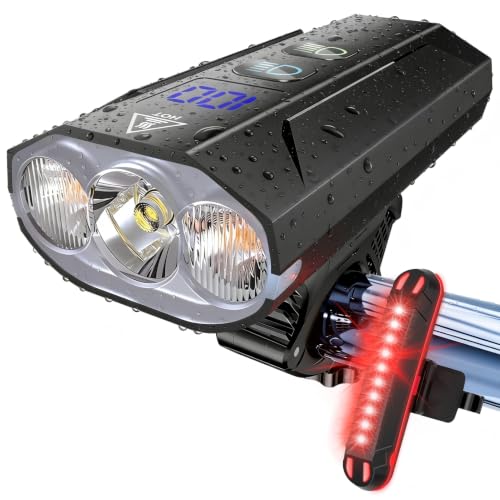
For a standard front light, many riders look at the Cygolite Hotshot series or the Bontrager Ion line, both of which offer focused beams suited to road and commuting use. For a fog light or wide-beam auxiliary lamp, the Niterider Lumina series and the Light and Motion Vis line are commonly considered for their broad, low patterns. Check each product’s beam specifications and mounting options against your bike before you buy.
Standard front light: View on Amazon
Fog light for bike: View on Amazon
FAQ
Are fog lights for bike legal on public roads?
Rules vary by state and locality. Many places allow auxiliary lights as long as they are aimed properly and do not dazzle other road users, but some restrict brightness or require specific mounting. Check your local vehicle or bicycle code, and consult a local transportation office or legal professional if you are unsure.
Can a fog light replace a standard front light?
For trails and slow riding, a fog light can work as your primary light. For fast road riding, it usually cannot replace a focused beam because it does not reach far enough down the road. Many riders pair the two rather than choosing one.
How should I aim a fog light on a bike?
Mount the light low and tilt it slightly downward so the brightest part lands on the ground about 3 to 5 meters ahead. Test your aim on a wall or on the road in the evening, and check it from the side and from a distance to be sure it does not shine into the eyes of approaching people.
Do fog lights work in heavy rain?
They help more than a tight beam in light to moderate rain and fog because their low, wide pattern reduces backscatter. In heavy downpours, visibility drops for any light, so slow down and make sure you have a rear light and reflectors as well.
Is a fog light useful during the day?
A fog light is less common as a daytime light than a flashing standard front light, but many riders use a steady or flashing auxiliary light in daylight to improve conspicuity. Set it to a visible mode and confirm your local rules allow daytime use.
Conclusion
Fog lights for bike and standard front lights solve different problems. Fog lights win on close-range coverage, trail work and riding in mist or damp conditions. Standard front lights win on distance, simplicity, glare control when aimed well, and everyday versatility. Most riders who ride at night in mixed conditions will get the most out of a standard light for reach plus a fog light for the ground around them. Consider your terrain, your speeds and your local rules, then choose the setup that fits how you actually ride.