 By Miles Sinclair
Updated November 2026
A Blackburn bike pump is one of the simplest tools you can own, but a few details decide whether you get a firm, accurate tire or a flat that refuses to hold air. Knowing how to use a Blackburn bike pump comes down to matching the head to your valve, locking it on properly, and pumping to the pressure printed on your tire sidewall. This guide compares the common pump setups riders choose between so you can see which one fits your bike and your habits.
Because Blackburn makes both floor pumps and compact hand pumps, the right answer depends on where you ride and how often you need air. Below, the two options are compared on the criteria that matter most in daily use.
Quick Comparison: Floor Pump vs. Compact Hand Pump
| Criterion | Blackburn Floor Pump | Blackburn Compact Hand Pump |
|---|---|---|
| Best use | Home and garage maintenance | Roadside repairs and travel |
| Pumping effort | Low, thanks to a long stroke and stable base | Higher, especially above 80 psi |
| Pressure gauge | Usually included and easy to read | Often limited or absent |
| Portability | Stays at home | Fits in a jersey pocket or saddle bag |
| Valve compatibility | Typically Presta and Schrader | Varies by model; check the head |
| Speed to full pressure | Fast | Slower |
Ease of Setup and Valve Compatibility: Winner: Floor Pump
Before you pump anything, identify your valve. Road bikes and many higher-end mountain bikes use Presta valves, which are thin with a small lock nut on the stem. Most hybrids, cruisers, and kids’ bikes use Schrader valves, which look like a car tire valve. Blackburn floor pumps typically have a dual-head design that handles both, and the head locks onto the valve so air does not leak during the pump stroke.
Here is how to set up a Blackburn floor pump for a Presta valve:
- Unscrew the small lock nut on the valve stem until it sits near the top of the threads.
- Flip the pump head’s Presta lever or select the Presta side, depending on your model.
- Press the head straight onto the valve. Do not angle it, or air will hiss out.
- Close the lever or lock the head so it clamps the valve tightly.
For a Schrader valve, you generally press the head straight on without a lever and make sure the locking collar is seated. The floor pump wins here because its larger head and base make alignment easier to see and hold. A compact hand pump often has a single head that requires more care, and some riders find it harder to keep square on the valve with cold or gloved hands.
Pumping Effort and Pressure Control: Winner: Floor Pump
Your tire’s maximum pressure is printed on the sidewall, usually as a range such as 80–120 psi for a road tire or 25–40 psi for a mountain tire. Blackburn floor pumps generally have a longer barrel and a wider base, so you can reach higher pressures with less strain. Owners often report that the gauge is far easier to read while the pump is standing still, which helps you stop at the target rather than overshooting.
To set your pressure accurately:
- Read the recommended range on the tire sidewall and pick a number within it based on your weight and terrain.
- Inflate with steady, full strokes while watching the gauge.
- Stop a few psi short of your target, then check. Overfilling is harder to undo quickly on narrow tires.
- Disconnect by flipping the lever (Presta) or pulling the head off (Schrader). A small burst of air escaping is normal.
A compact hand pump can reach the same pressure, but it demands more arm strength and offers less stable gauge feedback. For most riders, the floor pump is the easier and more consistent choice.
Portability and Roadside Use: Winner: Compact Hand Pump
If you need air away from home, a compact Blackburn hand pump is the more practical tool. It mounts to a frame or fits into a bag, so it is ready when a flat happens on a long ride. The trade-off is effort and speed. Expect more strokes to reach the same pressure, and keep your tire-changing tools nearby, since a pump alone will not fix a puncture.
For roadside inflation, use short, controlled strokes at first to seat the bead on the rim, then switch to full strokes. Check the pressure with a separate gauge if your pump lacks one. Hand pumps also tend to run warm after extended use, so pause if the barrel becomes uncomfortable to hold.
Gauge Accuracy and Readability: Winner: Floor Pump
Accuracy matters more than many riders expect. A gauge that reads 10 psi off can leave you with a tire that feels harsh or pinch-flat-prone. Floor pumps usually include a larger, more legible dial, and because the pump stands on its own, you can glance at the gauge without holding the barrel steady.
Compact pumps may have a small gauge or none at all. If you choose one, consider carrying a pocket pressure gauge and checking your tires against it periodically. Manufacturers generally recommend verifying gauge readings against a known reference, and a second gauge is a simple way to do that.
Maintenance and Durability: Winner: Tie
Both designs need the same basic care. Keep the seals lubricated with a light silicone-based product, wipe off grit from the valve head, and store the pump out of direct sunlight. Check the hose and connection for cracks if you have a floor pump with one. Owners often report that the most common failure is a worn head seal that leaks during inflation, which is usually a replaceable part. Consult the manufacturer’s manual for specific maintenance intervals and parts.
Which Should You Choose?
- Choose a Blackburn floor pump if you mostly inflate tires at home or in a shop, you want accurate readings, and you run road or performance tires that need high pressure.
- Choose a Blackburn compact hand pump if you commute or ride long distances, need a roadside backup, or want something that fits in a bag.
- Keep both if you ride often: use the floor pump for daily top-ups and the compact pump as an emergency tool.
- Pick based on valve type first. Confirm your bike uses Presta or Schrader and that the head you choose supports it.
For related setup guidance, see Mt Bike Shock Pump: How to Use One Correctly in 6 Steps for suspension-specific tips, and Presta Bike Valve Pump: 6 Best Picks for Road and Mountain Bikes if you are weighing valve compatibility across several models.
Recommended Products
Blackburn Airstik Floor Pump is a commonly referenced floor pump option for home use, with a long barrel and dual valve head.
View on Amazon
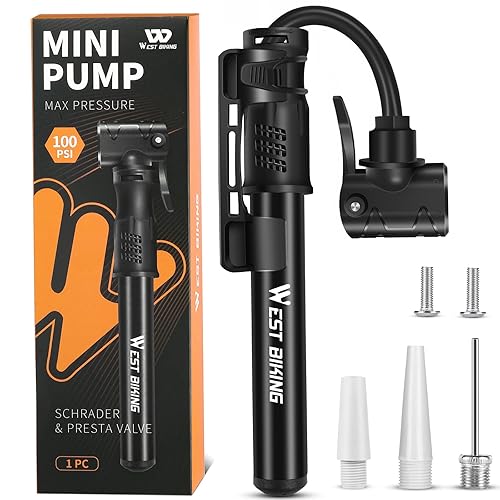
Blackburn Airstik Mini Pump is a compact option that many riders keep in a frame or saddle bag for roadside use.
View on Amazon
FAQ
How do I know which valve my bike has?
Look at the valve stem. Presta valves are thin with a small threaded lock nut at the top. Schrader valves are thicker, similar to a car tire valve, and have no lock nut. If you are unsure, check your bike’s manual or ask a shop.
What pressure should I pump my tires to?
Use the range printed on the tire sidewall as your guide. Choose a value within that range based on your weight, terrain, and comfort. Starting near the middle of the range is a sensible approach for most riders.
Why does air leak out when I pump?
The most common cause is an improperly seated head. Make sure the head is straight on the valve and the lever or lock collar is fully closed. A worn seal can also leak, and replacement parts are usually available from the manufacturer.
How do I release air from the tire when I overfill it?
Press the small pin in the valve core briefly, either on a Schrader or a Presta valve (after loosening the lock nut on Presta). Release in short bursts and check the gauge. If you have concerns about tire safety or rim damage from overinflation, consult a bike mechanic.
Can I use a Blackburn bike pump on a tubeless tire?
Yes, but seating a tubeless tire often requires a burst of higher pressure to pop the bead onto the rim. Use caution, follow the tire manufacturer’s guidance, and consider a shop-grade pump or air compressor if seating repeatedly fails.
Conclusion
Learning how to use a Blackburn bike pump is mostly about matching the head to your valve, sealing it firmly, and pumping to the sidewall range while watching the gauge. A floor pump wins for home accuracy and effort, while a compact pump wins for portability. Many riders benefit from owning both, using each where it works best.
Related reading
- FlexTail Tiny Bike Pump Pro: How to Use It and Get the Most From It
- E Bike Air Pump: Why Your Tire Pressure Drops and How to Fix It
- Ozark Trail Adult Bike Helmet: How to Choose, Fit and Use One
- Motor Bike Wheel Lock: How to Choose and Use One Safely
About Miles Sinclair
Miles Sinclair is part of our editorial team and reviews and edits our bike accessories guides, checking product details against manufacturer specifications and owner feedback.