 By Miles Sinclair
Updated November 2026
Choosing the right type of bike pump comes down to where you ride and how often you need air. A floor pump is the better pick for home maintenance and riders who want fast, accurate pressure every time. A compact hand pump wins for riders who need something they can carry on a ride and use when a tire goes flat on the trail. Both are worth owning, but the one you buy first should match your most common situation.
| Criterion | Floor Pump | Hand Pump (Frame or Mini) |
|---|---|---|
| Typical use | Home maintenance and pre-ride top-ups | Emergency roadside or trailside inflation |
| Maximum pressure | Often 100 to 160 psi, depending on the model | Often 100 to 120 psi on road-oriented models, lower on some minis |
| Pressure gauge | Usually built in and easy to read | Present on some models, absent on many compact pumps |
| Inflation speed | Fast, with large air volume per stroke | Slower, especially for wide tires |
| Portability | Stays at home or in the garage | Fits in a bag, frame mount, or jersey pocket |
| Valve compatibility | Most models accept both Presta and Schrader | Varies; check the head design before buying |
| Best for | Routine tire care and accuracy | Riders who need backup air on the go |
Pressure Range and Accuracy
Accuracy matters more than most riders expect. A few psi can change how a tire rolls, grips, and resists pinch flats. Floor pumps usually carry a larger, easier-to-read gauge, often with a scale in 1 psi increments. That makes it simpler to hit the number you want, whether your tires call for 40 psi on a wet commute or 25 psi on a trail bike.
Winner: Floor pump. The stable base and bigger gauge make precise adjustments easier. Hand pumps can reach high pressures on some models, but gauges on compact units are often small, and some have none at all. How Do Bike Cable Locks Compare to Other Types of Locks for Short Stops? (2026): Which Should You Choose? goes further into this.
Inflation Speed and Effort
Floor pumps move a large volume of air per stroke. Riders often report that a floor pump brings a deflated road tire up to working pressure in a fraction of the strokes a mini pump needs. Wide mountain bike tires and fat-tire setups feel the difference most, since they hold more air.
Winner: Floor pump. Hand pumps take longer, and high-pressure road tires can require considerable effort at the end of the stroke. That said, a mini pump is still workable for topping up a tire a few psi.
Portability and Carry Options
A hand pump earns its place in your kit by weighing very little. Mini pumps mount to a frame and some slim models fit in a seat bag. Frame pumps with a full barrel offer more volume and pressure than mini pumps, though they add some bulk to the bike. Floor pumps are not designed to travel, and their base takes up real floor space.
Winner: Hand pump. If you ride more than a few miles from home, a pump you can carry is the only type that actually comes along.
Valve Compatibility
Valve compatibility is a common source of frustration. Road bikes typically use Presta valves, while many mountain bikes and city bikes use Schrader. Many floor pumps include a head that switches between both, and some riders use an adapter to bridge the gap. If you are unsure, read the adapter notes in Presta Valve Bike Pump Adapter Review: Key Features Explained before you buy.
Winner: Floor pump, since most models handle both valve types without extra parts. Some hand pumps are limited to one valve style, so check the head before purchase. Riders with tubeless setups should also review Best 16 Bike Pumps for Home, Trail and Tubeless Tires, since tubeless seating often needs a fast burst of air.
Build Quality and Durability
Floor pumps tend to have larger hoses, sturdier bases, and more robust barrels. Hand pumps depend on compact construction, and their fittings and hoses see more stress from being packed and unpacked. Riders who need reliable performance on rough trails often find that a well-built frame pump holds up better than the smallest mini models.
Winner: Floor pump for long-term durability at home. A quality frame pump is the best compromise for trail use.
Which Should You Choose?
- Choose a floor pump if you mostly ride from home, maintain tires weekly, and want accurate pressure readings every time.
- Choose a hand pump if you commute, tour, or ride trails where a flat means walking or fixing on the spot.
- Choose a frame pump if you want backup air with more volume than a mini pump, and you are comfortable with a bit more bulk on the frame.
- Choose a mini pump if weight and space matter most and you accept slower inflation.
- Choose both if you ride often and want a home setup plus a carry option for emergencies.
Floor Pump Option
Floor pumps built for road and mountain use are widely available and typically include a gauge and dual valve heads. Consider the Lezyne Pressure Floor Drive as a common example of a floor pump with a clear gauge and a sturdy base. View on Amazon
Hand Pump Option
For carry-along use, a frame-mount hand pump is a practical choice. The Topeak Joe Blow Sport III is a widely recognized frame pump that many riders keep on their bikes. You can read more in Topeak Joe Blow Sport Iii Bike Pump: A Practical Guide (2026). View on Amazon
Mini Pump Option
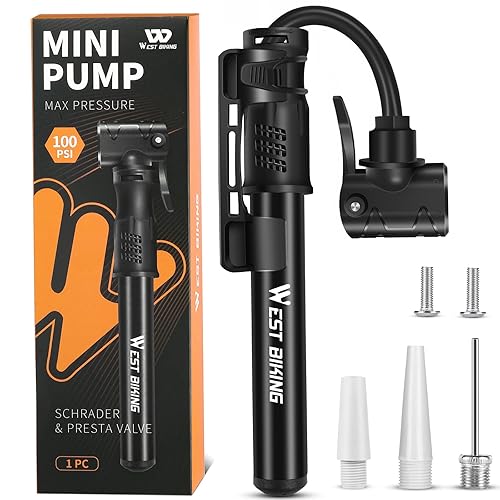
If you want the smallest possible option, a mini pump with a built-in head is easy to stash in a jersey pocket or bag. The Lezyne Pocket Drive is a well-known compact model. View on Amazon For pressure readings on compact pumps, see 6 Best Handheld Bike Pumps for Road and Trail Riders (2026).
FAQ
Is a floor pump necessary if I already have a hand pump?
No, but it helps. A floor pump makes it easier to set exact pressures and fill tires quickly at home. A hand pump is enough for emergencies, though it takes longer and gives less precise readings.
Can one pump work for both road and mountain bike tires?
Often yes, as long as the pump reaches the pressure your road tires need and has a head that fits your valve type. Mountain bike tires run at lower pressures, so a pump with a clear gauge at low psi readings is useful.
Do I need a pressure gauge on a hand pump?
A gauge is helpful, especially for road riders who run high pressures. Many compact pumps lack one, so riders often rely on pressing the tire by feel, which is less accurate.
Which valve type should I check first?
Look at your wheels before buying. Presta valves are narrow with a small locking nut, while Schrader valves are wider and resemble car tire valves. Many floor pumps handle both, but some hand pumps do not.
Should I consult a professional about tire pressure for my bike?
For most riders, the pressure range printed on the tire sidewall is the right starting point. If you ride heavy loads, race, or have a tire design you are unsure about, ask a local bike shop for guidance.
Conclusion
For most riders, a floor pump at home and a compact pump for the road is the most reliable combination. A floor pump gives you accuracy and speed, while a hand pump keeps you moving when a tire goes flat away from home. If you can only buy one, choose the type that fits how you actually ride: stay close to home and choose a floor pump, or ride far and choose a portable model.
About Miles Sinclair
Miles Sinclair is part of our editorial team and reviews and edits our bike accessories guides, checking product details against manufacturer specifications and owner feedback.